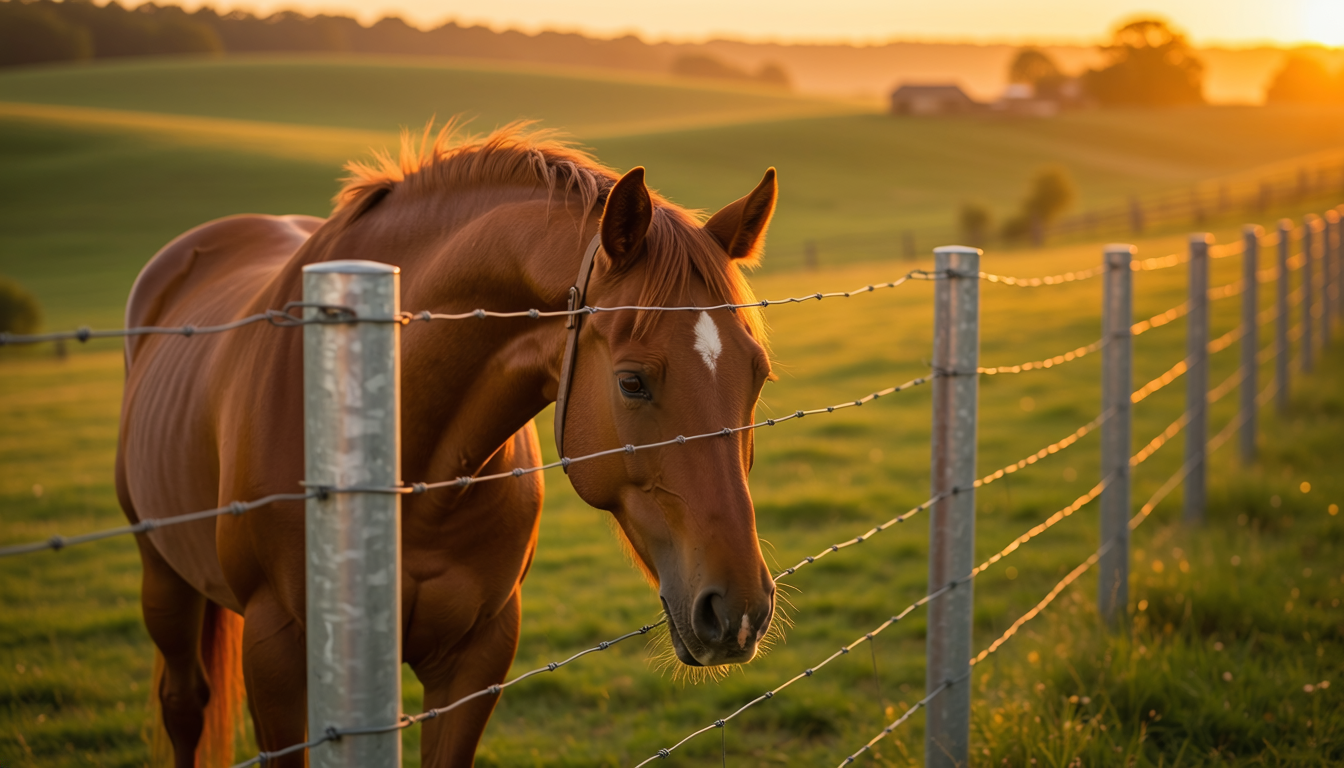
Plastic caps on steel fence posts are supposed to protect horses, livestock, and the people who work around them. Anthony Burr, founder of Safety Pickets, says that on farms and horse properties they often stop doing that job long before the fence needs replacing.
Burr designed his patented, reusable steel cap for star pickets, the steel posts Americans usually call T-posts, with construction sites in mind. Agriculture grew faster than he expected, led by equine properties, stud farms, and smaller hobby farms. Based on what he has seen and what customers have sent him, plastic caps are a short-term fix at best: they break down outdoors, and animals chew them.
Burr says equine owners have the most at stake. Dressage horses and stud animals are expensive, and an injury on a fence post can mean costly treatment or, in the worst case, putting the horse down.
“These are very, very expensive animals,” he says. “So if one of them is to get hurt or, even worse, if one of them was to get an injury where they had to be put down, that’s a lot, a lot of money at stake.”
Many of these properties also board horses for owners who don’t have land of their own. That puts the property on the hook for animals that belong to someone else. Burr notes that it doesn’t take much for an accident to happen.
“All you need is a bit of bad weather or the horses to get spooked, and they jump up and come back down,” he says. A horse that rears near a fence line can come down on whatever is at the top of the post.
Farm fencing is expected to stand through years of weather. Burr says the plastic caps on top of it are not built for that.
Asked what a farmer would find walking a fence line that was capped with plastic two years earlier, his answer was simple: most likely, no caps at all. Sun, rain, wind, and animals rubbing against the posts wear the plastic down until it is gone.
“The plastic, it’s really just not made to withstand that sort of time,” he says. “It’s more of a disposable item.”
Once a cap is gone, the post is back to bare steel, the same hazard the cap was bought to cover.
Broken plastic creates a second problem. Burr says the company has been sent videos of horses chewing plastic caps, which raises the risk of an animal choking on the pieces.
Wildlife gets involved too. Someone working on a remote mining site in Australia sent the company a video of a wild dingo walking up to the site and taking one of the plastic caps away with it. “So that’s what we’re dealing with,” Burr says.
He says the risk to wild animals is higher on large rural properties than in town, and many of those animals are species people are trying to protect. “Once you get a bit further out on the bigger properties, it definitely can happen,” he says.
For livestock owners, that means a plastic cap can fail in two ways. It can disappear and leave the post exposed, or it can break into pieces that end up in an animal’s mouth.
Burr says a steel cap should last as long as the post it sits on, if not longer, thanks to a protective coating on the outside. On construction sites, the caps take sledgehammer strikes, dust, and rough handling. “On farm fencing, they’ll last for as long as you need them to,” he says.
The Safety Pickets cap is made from high-strength low-alloy steel and built for long-term outdoor exposure to sun, rain, and impact, the same conditions that wear plastic away.
Visibility matters too. The cap has a fluorescent yellow finish that is easier to spot as light fades, which Burr says counts on farms where the workday rarely ends on schedule.
“They may plan their day to be back at the sheds or back at the ranch at a certain time,” he says. “But we all know that their days don’t go to plan.” A tired farmer checking fences at dusk, or a rider heading in late, is more likely to notice a bright cap than a bare post.
For hobby farmers and smaller equine operations, the purchase tends to be simple. Burr says those buyers usually pick up what they need in store for the stage of work in front of them. For any owner weighing plastic against steel, the useful question is how many times they want to buy and fit caps on the same fence line.
About Safety Pickets
Safety Pickets, Inc. was founded by Australian concreter Anthony Burr to replace brittle plastic picket caps with a patented, reusable steel safety cap for star pickets and T-posts. The company has a national distribution agreement with Bunnings Warehouse in Australia and is preparing to enter the US market.
Disclaimer: This article is intended for informational purposes only and does not constitute legal, financial, or investment advice. The views and opinions expressed herein reflect those of the individuals quoted and do not represent an endorsement of any company, product, or service mentioned. Readers should conduct their own due diligence and consult qualified professionals before making any investment decisions.
Disclosure: Individuals or companies mentioned may have a commercial relationship with KeyCrew.


